
What Are the Different Types of Pumps and Their Uses?
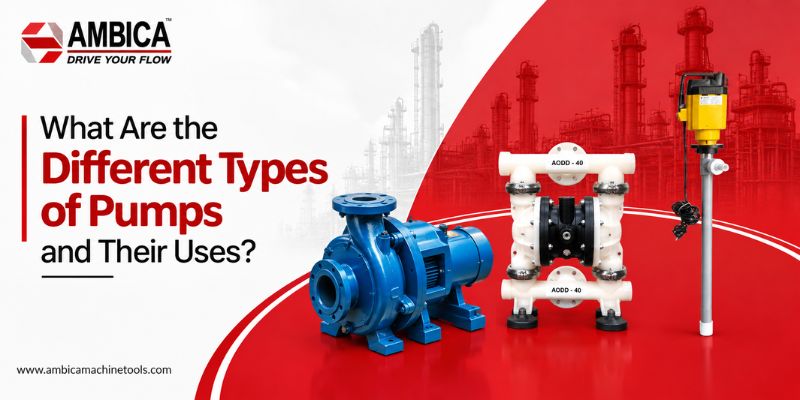
Table of Content
- What Is a Pump and Why Does the Type Matter?
- What Are the Different Types of Pumps and Their Uses?
- Centrifugal Pump vs Positive Displacement Pump
- How to Choose the Right Pump for Your Job
- Frequently Asked Questions
- Conclusion
A tanker needs its diesel moved from a 200-litre drum. A boiler needs to be pressure tested before it goes live. A cooling tower needs thousands of litres circulated every hour. Each of these jobs uses water or fluid, but no single pump handles all three. Pick the wrong one, and you either waste money on capacity you never use, or you buy a pump that cannot do the job at all.
What Is a Pump and Why Does the Type Matter?
A pump moves liquid from one point to another by adding energy to it, either through a spinning impeller or through a plunger, diaphragm, or piston that pushes a fixed volume of fluid with each cycle. That one design difference splits every pump on the market into two families: centrifugal pumps and positive displacement pumps.
Centrifugal pumps move large volumes at steady, moderate pressure. Positive displacement pumps move fixed volumes with each stroke and hold pressure even against resistance, which is why testing and jetting equipment almost always uses this design. Knowing which family a job calls for narrows the choice before you even look at a model number.
What Are the Different Types of Pumps and Their Uses?
Centrifugal Pump
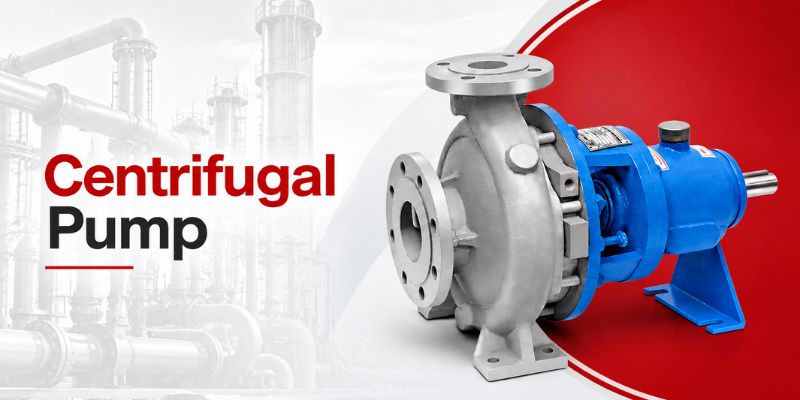
A centrifugal pump uses a spinning impeller to fling fluid outward and convert that motion into flow. Ambica’s range covers horizontal and vertical multistage models with flow up to 850 m³/hr, head up to 120 metres, sizes from 25 mm to 200 mm, and operating temperatures up to 350°C. Bodies come in cast iron, carbon steel, stainless steel (304, 316, 316L), bronze, and alloys such as Hastelloy for harsh chemicals.
Uses of Centrifugal Pump:
- Water supply and wastewater treatment plants
- Chemical and petrochemical liquid transfer
- Sugar mills and power plant cooling systems
- Paper and pulp processing lines
- Textile dyeing and finishing units
- Desalination and fertiliser plants
Any job on this list that needs a steady, high-volume flow of a relatively clean or mildly contaminated liquid suits a centrifugal pump manufacturer rather than a positive displacement unit.
Triplex Plunger Pump
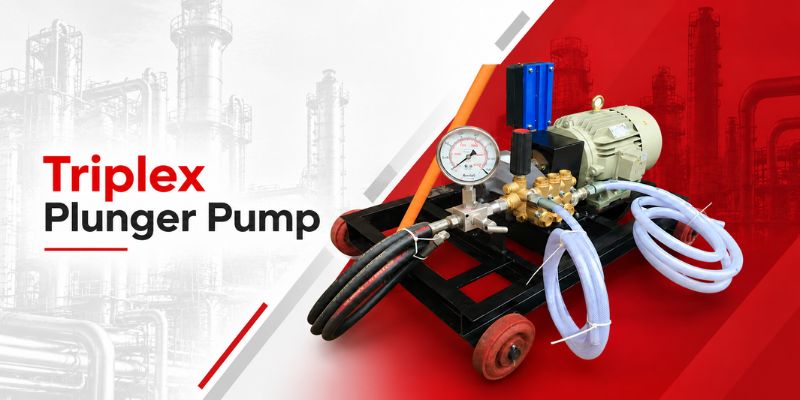
A triplex plunger pump uses three plungers instead of one, so the discharge stays smooth with far less pulsation than a single or duplex design gives you. It is a positive displacement pump, which means it holds pressure even when the outlet is nearly closed, unlike a centrifugal pump that loses flow as resistance rises.
Ambica builds these in SS304, SS316, brass, duplex steel, nickel bronze, and aluminium bronze, in motor and engine-driven versions.
Uses of Triplex Plunger Pump:
- Hydro testing of boilers, pressure vessels, and pipelines
- Car wash and vehicle cleaning systems
- High-pressure industrial cleaning and jetting
- Oil and gas field equipment
- Mining and mineral processing operations
- Agricultural spraying systems
A triplex plunger pump sits behind most of this equipment because the balanced three-plunger flow protects gauges and hoses from shock loading.
AODD Pump: Air Operated Double Diaphragm
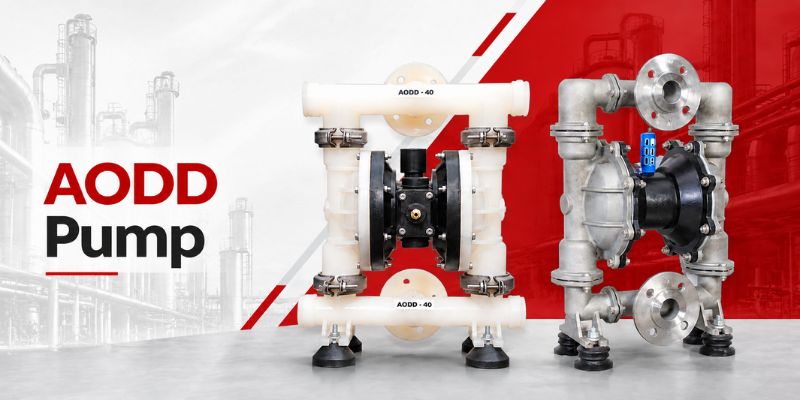
An AODD pump runs on compressed air instead of electricity, using two diaphragms that move back and forth to draw in and push out fluid. It self-primes, runs dry without damage, and has no mechanical seal to wear out or leak, which matters in a plant where a spark from an electric motor is a real hazard.
Ambica’s models run from ½ inch to 2 inch BSP, moving 35 to 586 LPM at up to 100 PSI, in polypropylene, PVDF, stainless steel 316, or aluminium depending on what the fluid needs.
Want to understand how AODD pumps work, their key components, applications, and benefits in more detail? Read our detailed guide on What Is an AODD Pump? to get a clearer overview.
Uses of AODD Pump:
- Chemical transfer in process plants
- Ceramic slurry and abrasive liquid handling
- Food and beverage processing
- Textile mill dye and chemical transfer
- Wastewater and effluent handling
- Powder and viscous liquid transfer
An AODD pump manufacturer builds like this to handle thick, abrasive, or dirty liquids that would wreck a centrifugal pump’s impeller, which is why chemical plants, ceramics units, food processors, and textile mills reach for one.
Drum Pump: Also Called a Barrel Pump
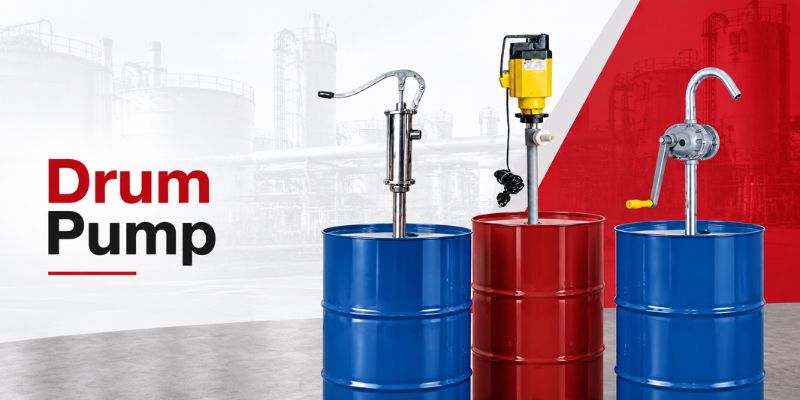
A drum pump is a long, narrow pump built to drop through the 2-inch bung opening of a standard 200-litre drum and pull liquid straight out. Ambica makes it in three drive types: hand-operated (roughly a litre per turn, up to 100 LPM), motor-operated (100 LPM with 10 metres of head), and pneumatic (up to 85 LPM, spark-free for flammable liquids).
Bodies come in aluminium with zinc-plated steel, or stainless steel 304/316 depending on the fluid.
Uses of Drum Pump (Barrel Pump):
- Transferring oil, diesel, petrol, and kerosene from drums
- Dispensing acids, alkalis, and industrial chemicals
- Moving solvents and paints in workshops
- Handling pharmaceutical liquids in batches
- Food and beverage ingredient transfer
- Agricultural chemical dispensing
If you move liquid out of drums daily rather than occasionally, a barrel pump manufacturer unit built for continuous duty outlasts a light-duty hand pump by years.
Hydro Test Pump: Manual and Motorised
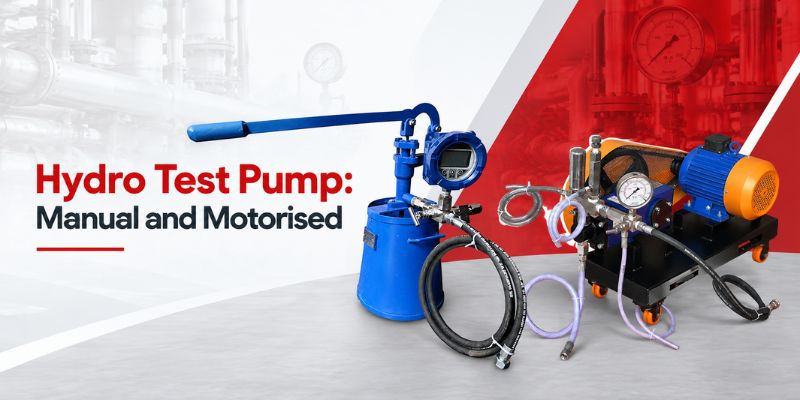
A hydro test pump fills a vessel with water and raises the pressure inside it, so an inspector can watch the gauge for a drop that signals a leak or a weak weld. This is not a cleaning pump. Flow barely matters here. Pressure stability is the entire job.
The manual line runs seven models from AMTH-35 to AMTH-705, covering 500 to 10,000 PSI, each with a single plunger, an 18 litre tank, and stainless steel valves and gauges. The motorised line goes further, up to 1,250 kg/cm² at a steady 120 LPH.
Uses of Hydro Test Pump:
- Pressure testing boilers and pressure vessels
- Pipeline and pipe joint testing before commissioning
- Gas cylinder inspection
- Fire-fighting equipment and hose testing
- Valve, flange, and fitting leak checks
- OEM quality testing of fabricated components
A manual hydro test pump needs no electricity, which makes it the standard choice for field testing on pipelines, gas cylinders, and fittings before a fabrication job is signed off. A workshop that runs these cycles all day rather than a few times a week is better served by the motorised hydro testing pump line.
Hydro Jet Pump: Also Called a Water Jetting Pump
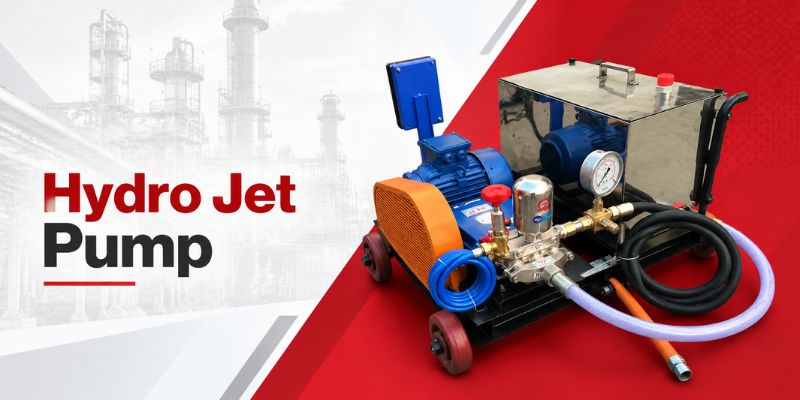
A hydro jet pump forces water through a small nozzle at high pressure to cut through scale, sludge, grease, and old paint without a drop of chemical. Ambica’s range covers pressure up to 140 kg/cm² (about 1,990 PSI) with flow up to 50 LPM, built on the same plunger design as the triplex pump above, so the discharge stays steady through a long cleaning run.
Uses of Hydro Jet Pump:
- Heat exchanger and condenser tube cleaning
- Boiler and pressure vessel interior cleaning
- Storage tank sludge removal
- Sewer and pipeline flushing
- Paint, rust, and coating removal ahead of repainting
- Foundry and casting surface cleaning
A hydro jet pump clears all of this in one shift, which is why refineries, sugar mills, and railway workshops run this equipment at every shutdown instead of scraping and chemical soaking, which take days.
Centrifugal Pump vs Positive Displacement Pump
Every pump type above falls into one of these two families. Knowing the difference settles most of the “which pump do I need” question before you compare a single spec sheet.
| Aspect | Centrifugal Pump | Positive Displacement Pump |
|---|---|---|
| Working principle | Spinning impeller adds velocity to fluid | Plunger, piston, or diaphragm moves a fixed volume |
| Flow vs pressure | Flow drops as pressure rises | Flow stays constant even against high pressure |
| Best for | Large volumes, low to moderate pressure | High pressure, testing, viscous or thick fluids |
| Runs dry safely? | No, can damage the seal | Some types (AODD) run dry without harm |
How to Choose the Right Pump for Your Job
Match the pump to the fluid and the pressure the job actually needs, not to the biggest number in the catalogue.
- Large volume, low pressure, clean fluid: a centrifugal pump moves it at the lowest running cost.
- High pressure that must hold steady: a plunger pump, whether for testing or jetting, is the only design built for it.
- Thick, abrasive, or hazardous fluid: an AODD pump handles it without a motor sparking near fumes.
- Moving liquid out of drums or barrels: a drum pump sized to your daily volume beats decanting by hand.
- Proving a vessel or pipeline is leak-free: a hydro test pump rated above your working pressure, with a margin the relevant code requires.
- Stripping scale, paint, or sludge: a hydro jet pump sized by deposit type, not by the highest PSI on the shelf.
Two more things decide the shortlist. Power availability rules out an electric pump on a site with no supply, which is where a manual or engine-driven unit takes over. Material compatibility rules out mild steel the moment acids, alkalis, or seawater enter the picture, which is why Ambica offers SS304, SS316, PVDF, and bronze options across its range instead of one standard build.
FAQs
What are the different types of pumps used in industry?
The main types are centrifugal pumps, triplex plunger pumps, AODD (air-operated double diaphragm) pumps, drum or barrel pumps, hydro test pumps, and hydro jet pumps. Centrifugal pumps move large volumes at steady pressure, while the rest are positive displacement types built for high pressure, thick fluids, or precise volume control.
What are the main uses of pumps?
Pumps move water, fuel, chemicals, and process fluids between tanks, systems, and equipment. Beyond simple transfer, they test pipelines and pressure vessels for leaks, clean boilers and heat exchangers with high-pressure water, and empty drums and barrels in workshops and plants.
How do I choose the right pump for my application?
Start with the fluid (clean, viscous, or abrasive), the pressure the job needs, and the volume per hour. From there, check the power source available on site and the wetted materials the fluid will not corrode. A supplier who builds more than one pump family, rather than just one product line, can match the job instead of fitting it to whatever they happen to sell.
What is the difference between a centrifugal pump and a positive displacement pump?
A centrifugal pump uses a spinning impeller, and its flow drops as outlet pressure rises. A positive displacement pump, such as a plunger or diaphragm pump, moves a fixed volume of fluid with every cycle and keeps that flow steady even against high resistance, which is why testing and jetting equipment always uses this design.
Which pump works best for high-pressure cleaning or testing?
A triplex plunger pump handles both jobs well, since it is the base design behind hydro jet pumps for cleaning and hydro test pumps for pressure testing. The difference between the two is the nozzle and the flow rate, not the pumping principle.
Conclusion
The right pump depends on what you are moving, at what pressure, and how often. A centrifugal pump handles routine transfer, a plunger pump holds pressure for testing and jetting, an AODD pump takes on fluids that would damage other designs, and a drum pump handles the daily job of emptying barrels. Match the pump family to the job first, then narrow down the model. For help choosing between these pump types, contact Ambica Machine Tools at info@ambicamachinetools.com or call +91 9601253837.