
What Pressure Rating Do You Need for a Hydro Test Pump?
Table of Content:
One of the most critical decisions when selecting a hydrotest pump is getting the pressure rating right. A pump rated too low will stall before reaching the required test pressure. One rated too high, used without proper pressure controls, risks over-pressurising the system and causing equipment damage or operator injury. This guide walks you through how to determine the correct pressure rating for your application so you can select the right pump with confidence.
Why Pressure Rating Matters in Hydrostatic Testing
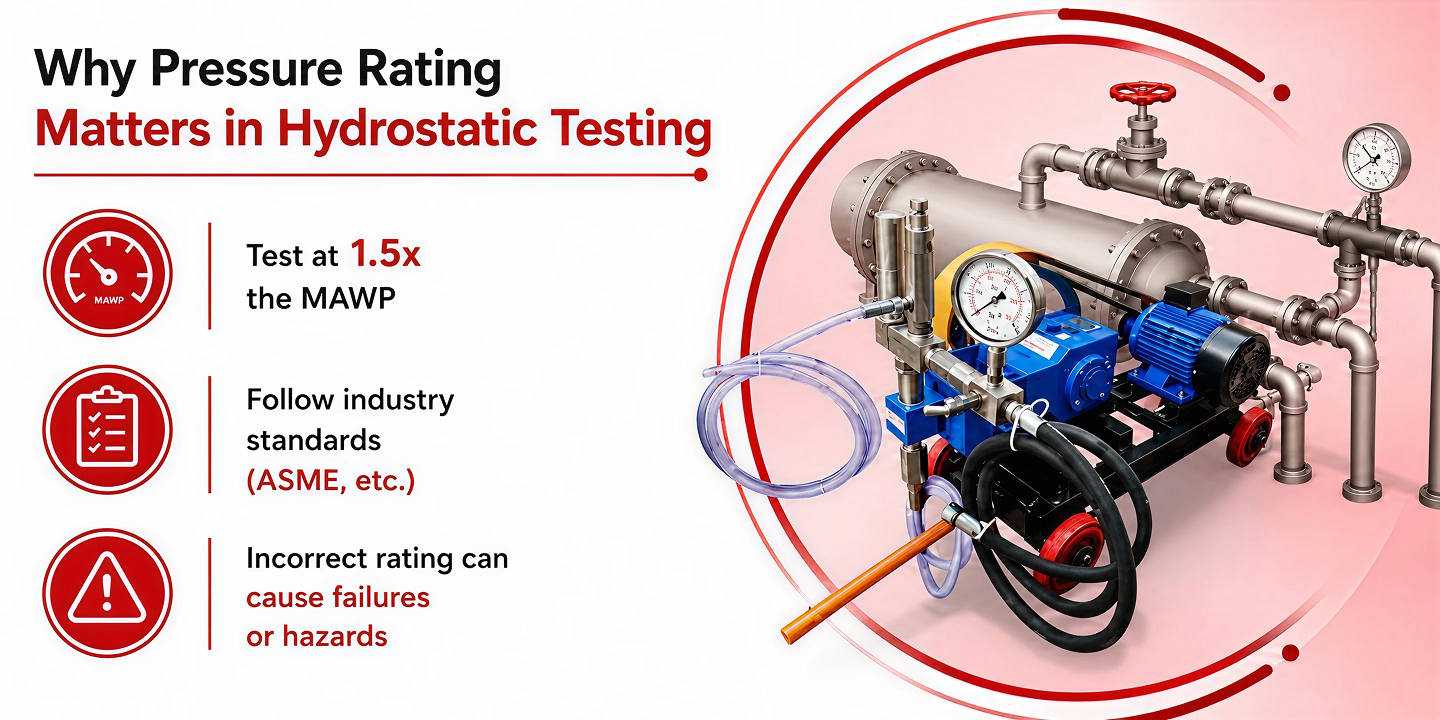
Every pressure-bearing system, whether it is a water pipeline, a gas cylinder, a heat exchanger, or a boiler, has a rated working pressure (also called the Maximum Allowable Working Pressure or MAWP). Hydrostatic testing requires you to pressurise the system above this working pressure to verify its structural integrity and confirm that there are no leaks.
The standard practice across most international codes and industry standards is to test at 1.5 times the maximum allowable working pressure. Some standards, such as ASME, may specify 1.3x or 1.5x depending on the application. Always refer to the relevant standard for your industry before selecting your pump.
Getting the pressure rating of your hydrostatic test pump wrong in either direction creates problems. An underpowered pump will stall before reaching the required test pressure. An excessively high-rated pump used without a proper pressure relief valve can over-pressurise the system and cause failures.
How to Calculate the Required Test Pressure
The formula is straightforward:
Test Pressure = Working Pressure x Test Factor (typically 1.3x to 1.5x as per applicable standard)
For example, if a pipeline operates at 200 bar, your test pressure should be at least 300 bar. Your chosen pump must comfortably reach and hold 300 bar without straining its components.
Key factors to consider when calculating required pressure:
- The maximum working pressure (MAWP) of the system under test
- The applicable testing standard (ASME, IS, BS, API, IBR, etc.)
- Any safety margins specified by the end client or regulatory body
- The internal volume of the system, which determines how much fluid is needed to reach the test pressure
- The material of construction, which affects pressure tolerance
Pressure Ranges by Industry and Application
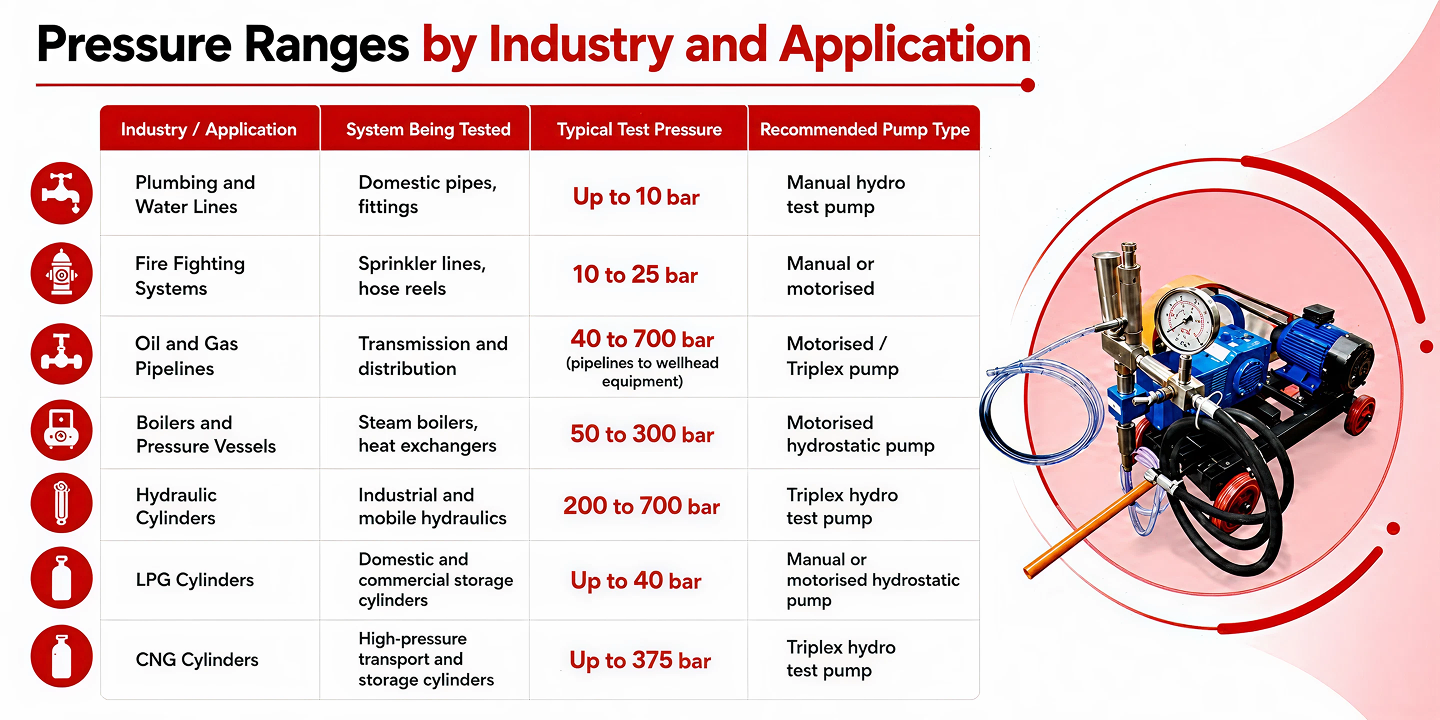
Different industries require very different test pressure ranges. Here is a quick reference:
| Industry / Application | System Being Tested | Typical Test Pressure | Recommended Pump Type |
| Plumbing and Water Lines | Domestic pipes, fittings | Up to 10 bar | Manual hydro test pump |
| Fire Fighting Systems | Sprinkler lines, hose reels | 10 to 25 bar | Manual or motorised |
| Oil and Gas Pipelines | Transmission and distribution | 40 to 700 bar (pipelines to wellhead equipment) | Motorised / Triplex pump |
| Boilers and Pressure Vessels | Steam boilers, heat exchangers | 50 to 300 bar | Motorised hydrostatic pump |
| Hydraulic Cylinders | Industrial and mobile hydraulics | 200 to 700 bar | Triplex hydro test pump> |
| LPG Cylinders | Domestic and commercial storage cylinders | Up to 40 bar | Manual or motorised hydrostatic pump |
| CNG Cylinders | High-pressure transport and storage cylinders | Up to 375 bar | Triplex hydro test pump |
Which Pump Type Matches Your Pressure Requirement?
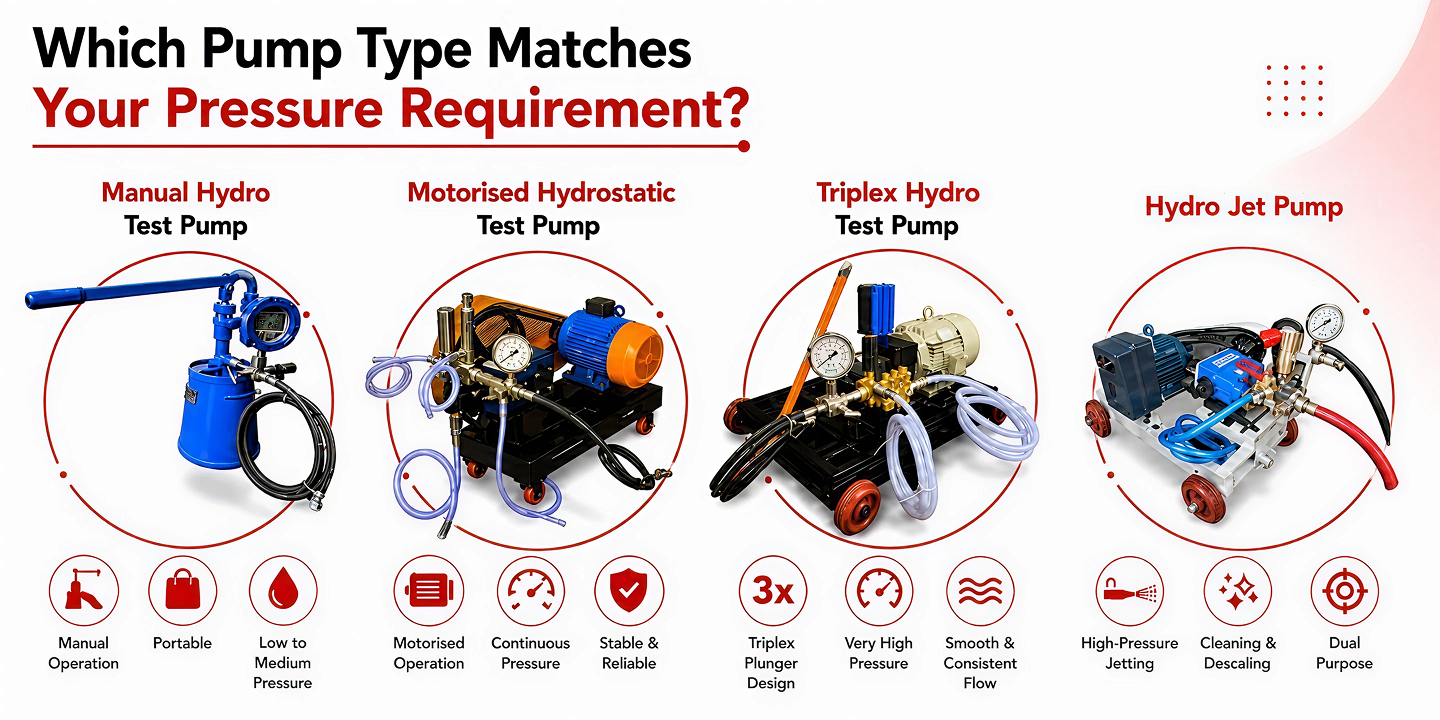
Once you know your required test pressure, matching it to the right pump type becomes straightforward.
Manual Hydro Test Pump:
A manual hydro test pump is ideal for low to medium-pressure applications. It is compact, portable, requires no power supply, and is well-suited for on-site testing of water lines, plumbing systems, and small vessels. Operator effort limits how long sustained high pressure can be maintained.
Motorised Hydrostatic Test Pump:
A motorized hydrostatic test pump is the right choice when testing larger systems or when continuous, consistent pressure is required. Electric or engine-driven models eliminate operator fatigue and deliver stable output over extended test durations.
Triplex Plunger Pump:
For very high-pressure applications such as hydraulic cylinder testing, CNG cylinder testing, or subsea equipment validation, a triplex plunger pump delivers the sustained high-pressure output required. The three-cylinder plunger design works in a staggered sequence to provide smooth, consistent, and near-pulsation-free flow even at extreme pressures, making it the preferred choice for oil and gas, petrochemical, and cylinder manufacturing industries.
Hydro Jet Pump:
If your application involves high-pressure water jetting for cleaning or descaling in addition to pressure testing, a hydro jet pump may serve a dual purpose. These are purpose-built for jetting applications and should not replace a dedicated hydrostatic test pump where leak detection accuracy is required.
Common Mistakes When Choosing Pump for Pressure Rating
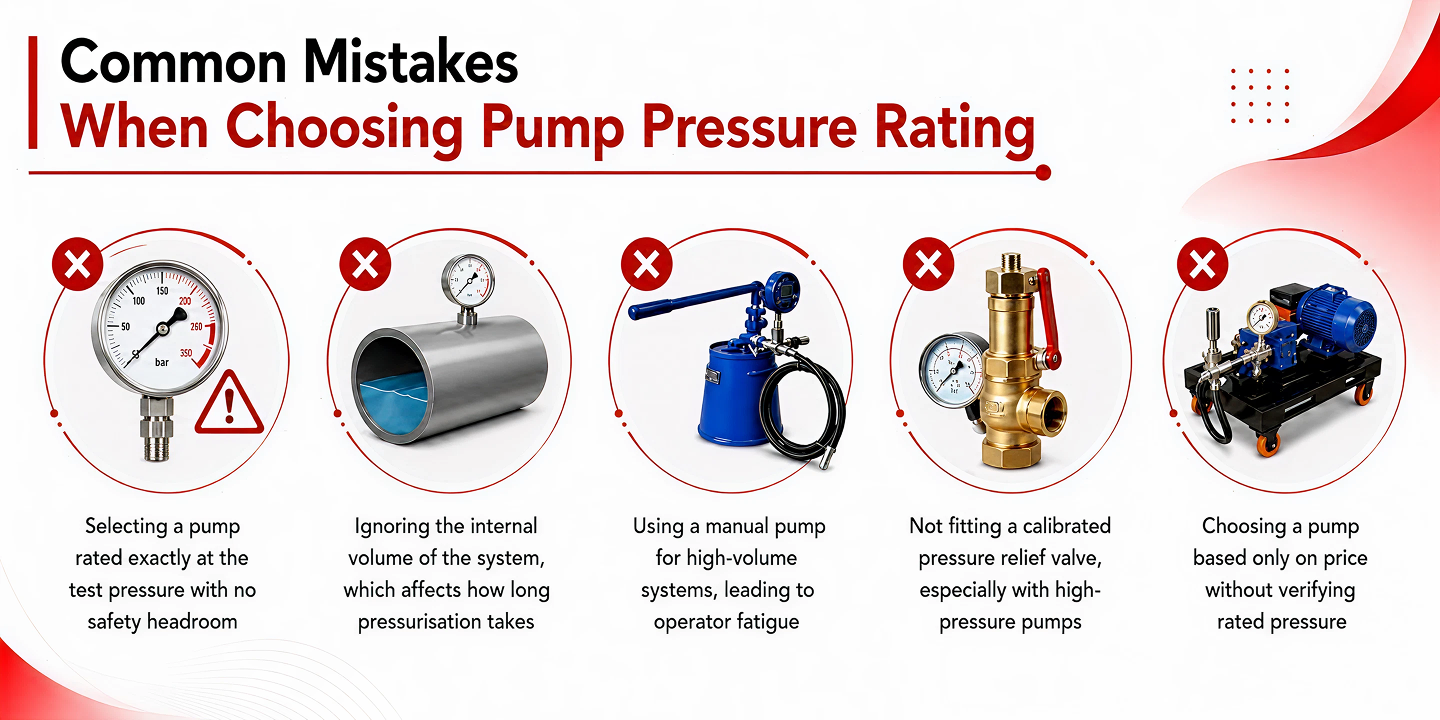
- Selecting a pump rated exactly at the test pressure with no safety headroom
- Ignoring the internal volume of the system, which affects how long pressurisation takes
- Using a manual pump for high-volume systems, leading to operator fatigue before reaching the target pressure
- Not fitting a calibrated pressure relief valve, especially when using high-pressure motorised pumps
- Choosing a pump based only on price without verifying its rated output pressure matches the application
For a structured approach to pump selection, read our blog: Points to Consider While Selecting a Hydraulic Test Pump
Conclusion
Choosing the right pressure rating for your hydro test pump starts with knowing your system’s working pressure, applying the correct test factor as per your applicable standard, and matching the result to a pump type built for that range. Whether you need a portable manual pump for low-pressure site work or a heavy-duty triplex unit for extreme industrial applications, getting the pressure rating right is non-negotiable.
At Ambica Machine Tools, we manufacture a wide range of hydrostatic test pumps, including manual, motorised, and triplex models, designed to meet diverse industrial testing requirements. Whether you need a compact solution for field testing or a high-capacity system for demanding industrial operations, our experts can help you select the most suitable pump based on your pressure and testing requirements. Contact us today for professional guidance. Call us at +919601253837 or email us at info@ambicamachinetools.com.